




Yen Slides to Weakest Since 1986, Rattling Japan and Traders
The yen weakened to its lowest level against the dollar since 1986, a historic slide that raises intervention risk and pressures Japanese equities.
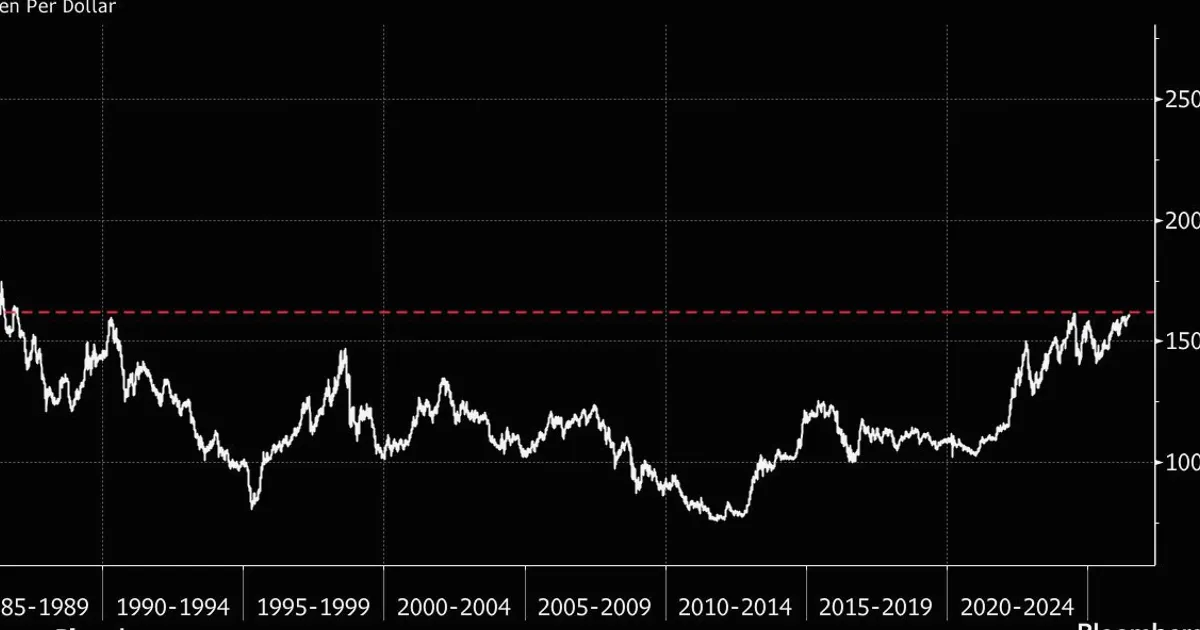
The yen slid to its weakest level against the dollar since 1986, a historic milestone that has rattled Japan and put currency traders on high alert for potential intervention by Japanese authorities.
The Japanese currency breached the key psychological level of 160 per dollar, extending a prolonged depreciation driven by the wide interest rate differential between Japan and the US. Despite recent rate hikes by the Bank of Japan, the BOJ's policy rate remains near zero, while the Federal Reserve has kept rates elevated to combat inflation. This gap has fueled a persistent carry trade, where investors borrow yen at low rates to invest in higher-yielding dollar assets, adding downward pressure on the yen. The slide has raised concerns about imported inflation in Japan, as a weaker yen increases the cost of energy and raw materials, squeezing corporate profits and household budgets. For equity traders, the yen's decline has had mixed effects: export-oriented companies like Toyota benefit from a weaker yen, but the broader market faces headwinds from rising import costs and uncertainty over intervention. NowPrice's real-time stock quotes show the Nikkei 225 reacting to these currency moves, with traders closely monitoring the yen for further volatility.
Looking ahead, all eyes are on the Bank of Japan and the Ministry of Finance for any signs of intervention. Japanese officials have repeatedly warned against speculative moves, but actual intervention remains uncertain. Traders should watch for verbal intervention or actual dollar-selling operations, which could trigger sharp but temporary yen rebounds. The key data point this week is the US personal consumption expenditures (PCE) price index, which will influence Fed rate expectations and, by extension, the dollar-yen pair. A hotter-than-expected reading could push the dollar higher, testing the yen further, while a cooler print might ease pressure. Additionally, the BOJ's summary of opinions from its June meeting could provide clues on future policy normalization. The yen's trajectory remains a critical factor for global risk sentiment, as a sustained slide could spill over into other Asian currencies and emerging markets.