




US 20-Year Bond Auction Draws 4.927% High Yield, Strong Demand
The US Treasury auctioned $13 billion in 20-year bonds at a high yield of 4.927%, with strong international demand driving a solid bid-to-cover ratio.
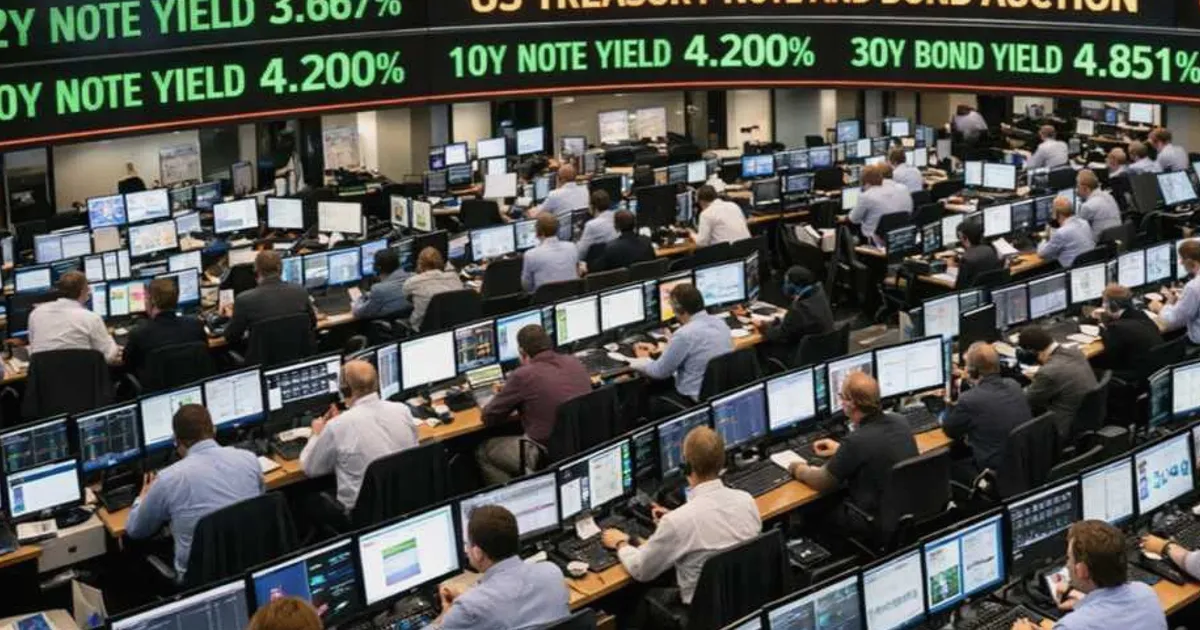
The US Treasury sold $13 billion in 20-year bonds on Tuesday, with the auction drawing a high yield of 4.927%, the highest accepted yield awarded to all successful bidders. This yield reflects the market's required compensation for holding long-term government debt, which is influenced by factors such as inflation expectations, the Federal Reserve's monetary policy stance, and global demand for safe assets. The auction's results are a key indicator of investor sentiment toward US fiscal sustainability and interest rate outlook.
Strong international demand was the standout feature, as indirect bidders—a category that includes foreign central banks—took a larger share than average. This helped push the bid-to-cover ratio, which measures total bids relative to the amount offered, above the recent average. Domestic buyers, however, were somewhat squeezed out by the foreign appetite. The tail, or the difference between the auction's high yield and the when-issued yield just before the auction, was minimal, indicating efficient pricing. Live rates prices and charts on NowPrice show how the 20-year yield is reacting to the auction results. The strong foreign participation may reflect ongoing demand from overseas investors seeking yield in a global environment where many central banks are still tightening or maintaining restrictive policies, while the minimal tail suggests that dealers did not need to offer a significant concession to clear the auction.
For rates traders, the strong demand at a relatively high yield suggests that investors are comfortable locking in yields above 4.9% for the long term, which may anchor the long end of the curve. This could influence the term premium, the extra compensation investors demand for holding longer-dated bonds, which has been compressed in recent years due to quantitative tightening and balance-sheet reduction by the Fed. The next focus will be on upcoming supply, including 5-year and 7-year note auctions later this week, as well as any shifts in Fed policy expectations that could influence demand at future auctions. Traders will also watch for any changes in swap spreads or yield-curve dynamics, as the 20-year sector is less liquid than the 10-year, and any dislocation could signal broader market stress. Additionally, the European Central Bank's transmission protection instrument and global rate differentials may affect foreign demand in subsequent auctions.