




PBOC Plans Overnight Reverse Repo in Next Stage of Policy Shift
China's central bank plans to add an overnight reverse repo tenor to its open-market operations, a key step toward modernizing its short-term rate steering framework.
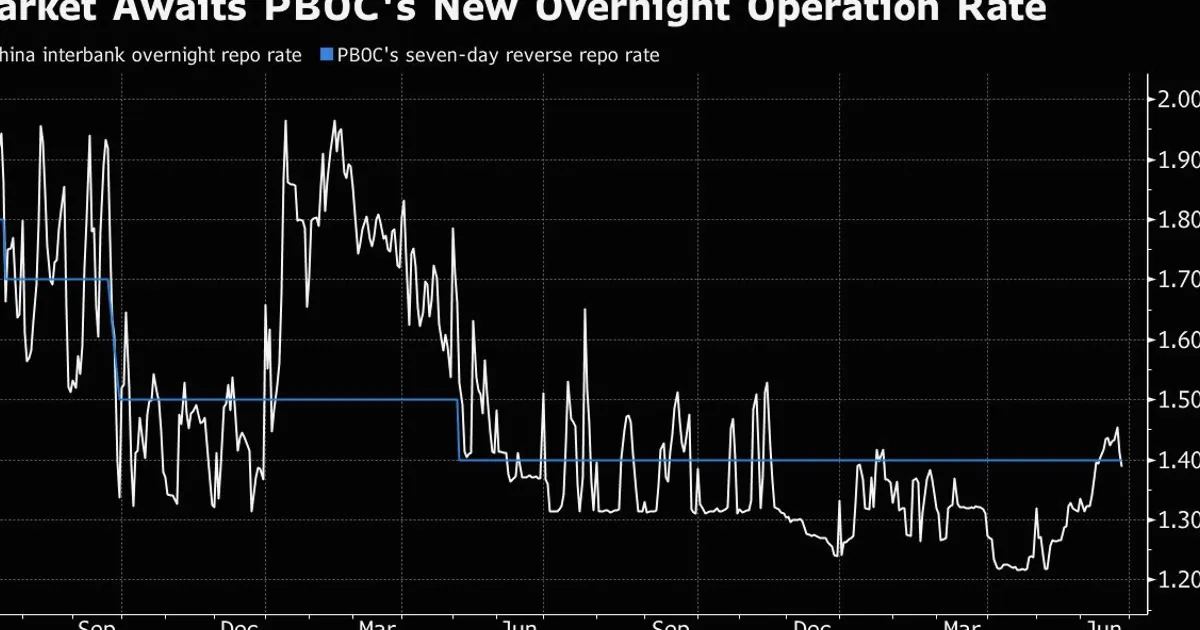
China's central bank is introducing an overnight tenor into its open-market operations, a key step toward reshaping how it steers short-term borrowing costs. The People's Bank of China (PBOC) plans to add an overnight reverse repo to its toolkit, according to a report from Bloomberg. This move is part of a broader policy shift aimed at improving the transmission of monetary policy and giving the PBOC more precise control over money market rates.
The overnight reverse repo will allow the PBOC to fine-tune liquidity in the banking system on a daily basis, complementing the existing seven-day and 14-day repos. For equity traders, this development signals that China is moving toward a more market-based interest rate corridor, similar to the Federal Reserve's system. A more predictable short-term rate environment could reduce volatility in Chinese stocks and bonds, as it lowers uncertainty about funding costs for financial institutions. However, the transition may also lead to temporary dislocations as market participants adjust to the new framework. For current pricing on Chinese equities, traders can check NowPrice's stocks page.
Looking ahead, market participants will watch for the PBOC's first overnight repo operation and any accompanying guidance on the rate corridor. The central bank may also adjust the standing lending facility (SLF) rate to align with the new overnight instrument. Traders should monitor the spread between the overnight repo rate and the seven-day repo rate, as a narrowing spread would indicate successful integration of the new tenor. Additionally, any commentary from PBOC Governor Pan Gongsheng on the policy shift could provide further clarity on the timing and scope of the changes.