




Fed Says Basis Trade Key Driver of Hedge Fund Treasury Exposure
The Federal Reserve identifies the cash-futures basis trade as the primary driver behind hedge funds' growing Treasury exposure, highlighting potential risks to financial stability.
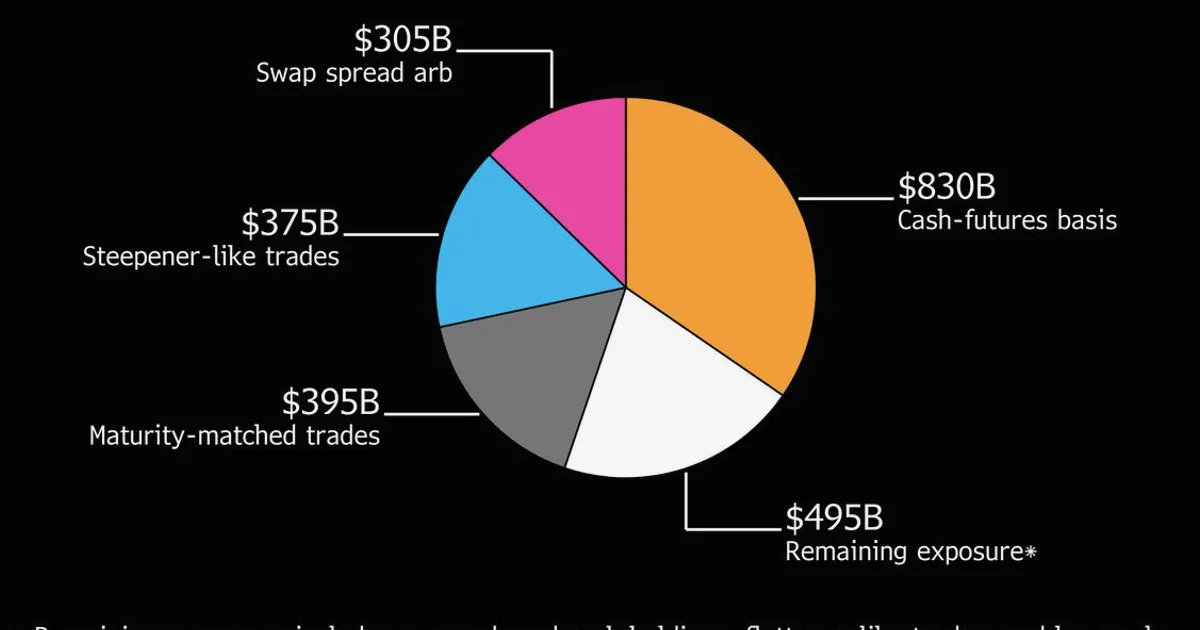
The Federal Reserve has stated that hedge funds' growing exposure to U.S. Treasuries is primarily driven by the revival of the cash-futures basis trade. This trade involves buying Treasury bonds in the cash market while selling Treasury futures to profit from price discrepancies between the two. The Fed's assessment highlights the increasing role of leveraged players in the Treasury market, which has implications for market functioning and financial stability.
The basis trade has historically been a popular strategy among hedge funds, but its resurgence raises concerns about potential vulnerabilities. When leveraged positions are unwound rapidly, it can lead to sharp moves in Treasury yields and funding markets, as seen during the 2020 COVID-19 turmoil. The Fed's monitoring of this activity is part of its broader focus on non-bank financial intermediation and systemic risk. For rates traders, the basis trade dynamics can influence the shape of the yield curve and the pricing of futures versus cash bonds. NowPrice's real-time charts show how these relationships are evolving, providing traders with live data on basis spreads and hedging flows.
Looking ahead, market participants will watch for any signs of stress in repo markets or sudden unwinding of basis positions. The Fed's semi-annual Financial Stability Report may provide further details on the scale of these trades. Additionally, any regulatory changes targeting leveraged Treasury exposure could alter the landscape for hedge funds and arbitrageurs. Traders should monitor the Treasury cash-futures basis for signals of positioning shifts, as well as the broader implications for liquidity in the world's deepest bond market.